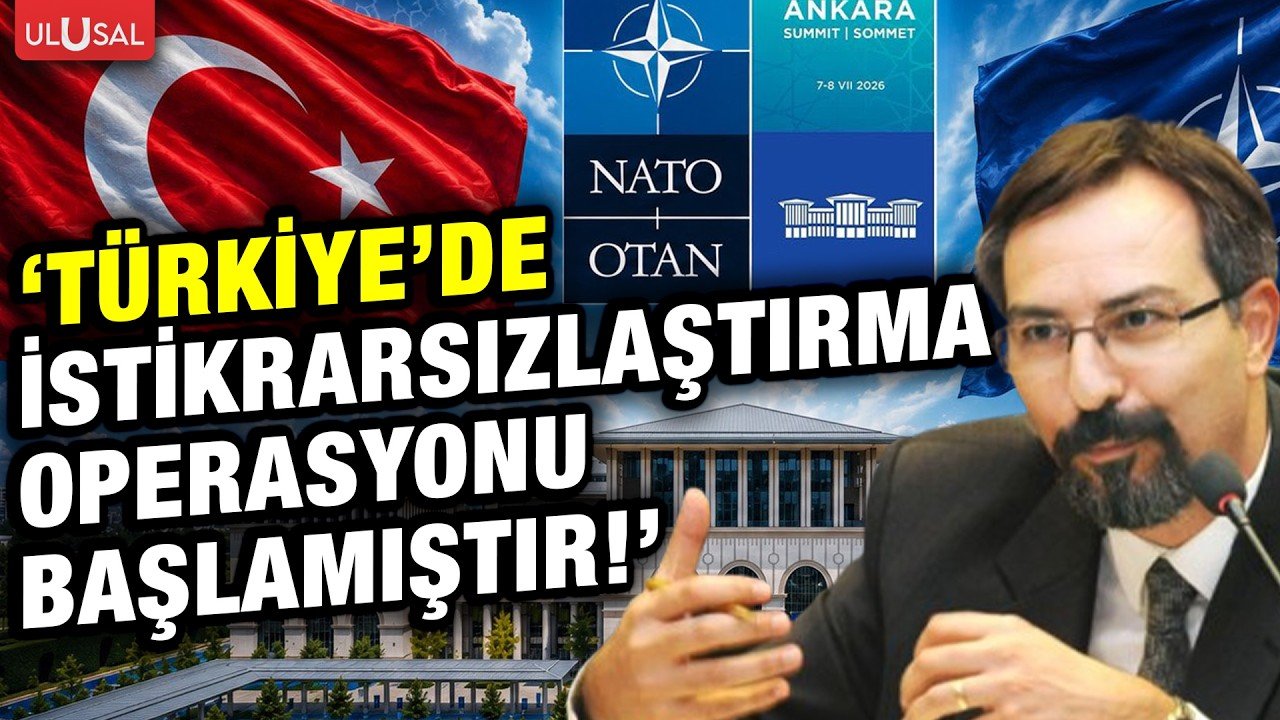

I am Professor Richard Sakwa. Although I cannot be with you in person today, I am greatly pleased to join you online. It is evident that the future of NATO remains profoundly uncertain, a reality reflected in the recent Ankara summit. NATO is entering a new era—what Elbridge Colby conceptualizes as “NATO 3.0.” While NATO 1.0 was a product of the Cold War designed to contain Soviet communism, and NATO 2.0 emerged following the dissolution of the Soviet Union, NATO 3.0 represents a fundamentally altered structure. Its primary function is to allow the United States to reallocate its strategic focus away from exclusive European defense toward the South China Sea, Taiwan, and broader global theaters.
The Ankara summit implicitly confirmed and accelerated this transition. At its core, NATO 3.0 reverts to the logic of NATO 1.0 by focusing on containment—this time directed at the Russian Federation as the successor state. The summit emphasized greater European defense responsibility, industrial capacity expansion, and a broadened strategic remit. However, the most significant strategic failure of the Ankara summit was its inability to constructively address the ongoing war in Ukraine. The underlying premise—that Russia can be coerced into negotiations through bombardment—is not a viable strategy; rather, it risks severe escalation.
This failure leaves Europe exposed to both horizontal escalation (the spread of conflict onto the European mainland) and vertical escalation (such as the potential use of tactical nuclear weapons). Just as observed during the NATO 2.0 era, the alliance’s operational trajectory itself is becoming a primary threat to European security, pushing the continent toward a potentially catastrophic escalation. Furthermore, as observers like former Turkish Prime Minister Ahmet Davutoğlu note, NATO’s primary challenges now stem from internal normative erosion rather than external rivals. The pillars of the Atlantic system—free trade, international law, and the UN Charter framework—are steadily deteriorating.
As Jeffrey Sachs has warned, NATO suffers from a lack of strategic vision, drifting toward strategic failure and heightened nuclear risks. While the Ankara summit reaffirmed Türkiye’s central geopolitical importance as a vital military power bridging Western Asia, mere self-preservation is insufficient to justify NATO’s continued existence. The alliance must redefine its purpose away from escalating continental warfare and toward fostering peace, stability, and development grounded in the principles of the United Nations Charter. Thank you.